

Exclusive Interview: Lionsgate, Jackson Estate Talk 'Michael'

By Stacy M. Brown
Senior Global Correspondent
Michael Jackson spent his life surrounded by people who wanted something from him. Money. Fame. Access. Control.
Some wanted a hit record. Some wanted a check. Some wanted ownership of the man himself. But according to the people behind the explosive Lionsgate biopic “Michael,” now poised to roar past $1 billion in worldwide box office despite savage reviews, only a tiny circle ever truly protected him.
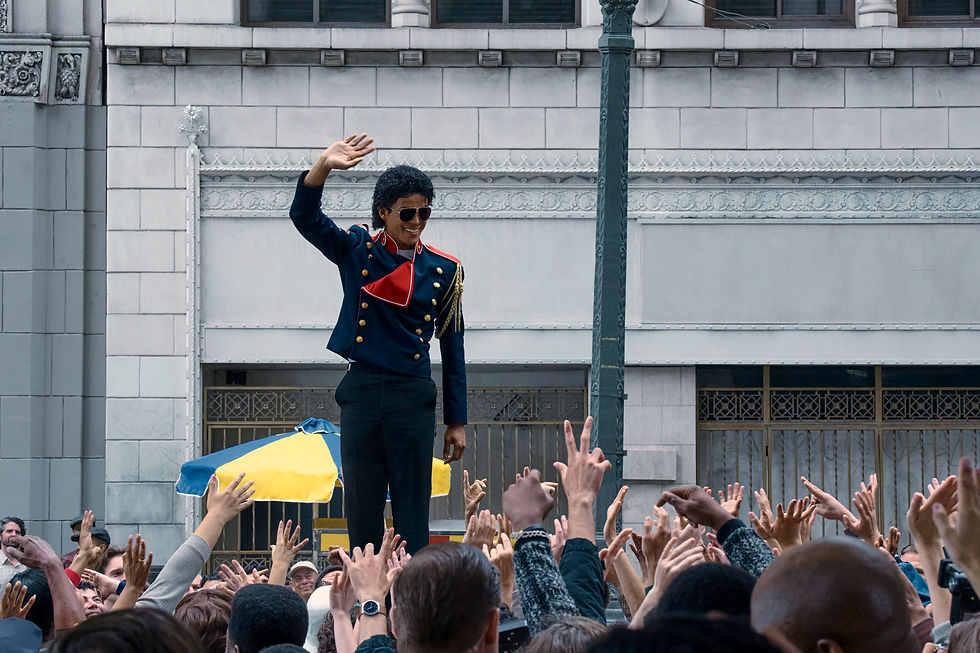
And that, more than the sequins, moonwalks, and sold-out theaters turning into emotional revivals, may be why audiences worldwide are reacting to the film like they’ve been waiting decades to finally see the real Michael Jackson.
Inside Lionsgate, executives now admit they realized early they had something much larger than a standard music biopic.
“Michael Jackson was one of the greatest recording artists of all time, a leading cultural icon in music, dance, fashion, and philanthropy whose story is compelling for moviegoers worldwide,” Peter Wilkes of Lionsgate told Black Press Media USA exclusively.
“With award-winning producer Graham King, renowned director Antoine Fuqua, an amazing cast led by the breakout performance of Jaafar Jackson, our international partners at Universal and Kino Films, and our collaboration with John Branca and the Michael Jackson Estate, we have been able to bring this story to the massive audience it deserves.”
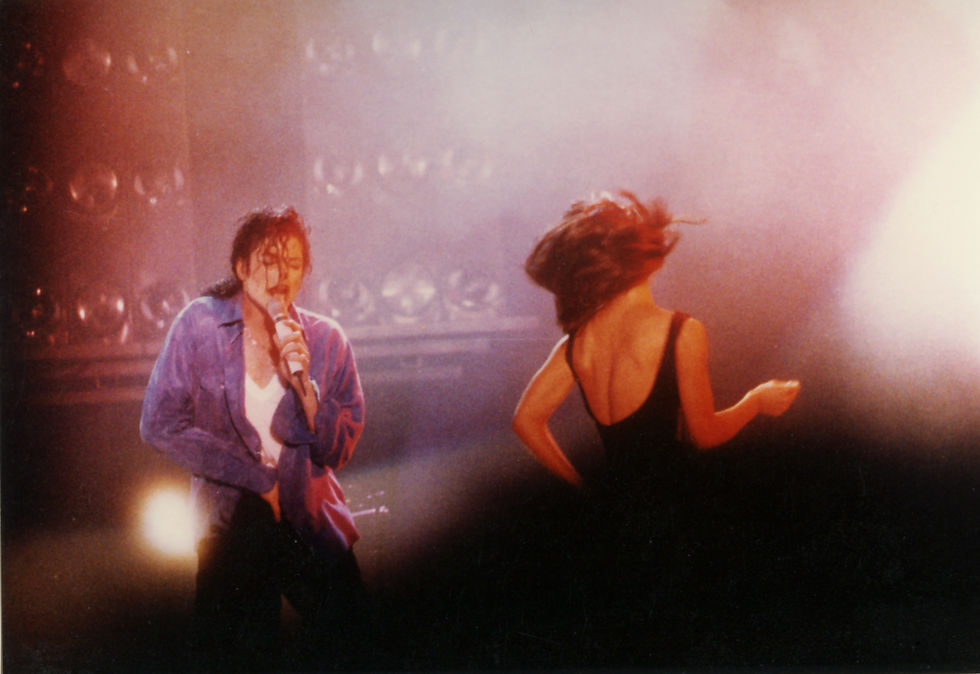
Another source connected to the studio said Lionsgate understood almost immediately that the film’s emotional power went beyond nostalgia and music.
“When we first saw how Jaafar Jackson embodied Michael Jackson and felt the electricity of the live performances, we knew the film was special,” the source said.
The studio also acknowledged the movie underwent significant restructuring after filming wrapped. “Though we had to pivot to change the film after we had completed principal photography, the new approach proved to be a benefit and allowed us to tell more of the story and reveal more of the music,” the studio source stated. “The original film was over 3.5 hours long and the story still felt a little compressed.”
Lionsgate also made clear the studio fully understood the global force attached to Jackson’s name. “We always knew that the film would be driven by Michael Jackson’s deep global fanbase,” the source said, “but we also had faith that it would resonate with moviegoers in all categories and demos because of the storytelling and the incredible music.”
Right now, that story is detonating across theaters worldwide.
Fans are showing up dressed like Jackson. Entire crowds are dancing during screenings. Social media is flooded with standing ovations, tears, and audience singalongs that resemble live concerts more than movie screenings.
“After the opening weekend, seeing the reaction around the world, on social media, and at the box office, we realized this was going to be something very special,” longtime Jackson attorney and estate co-executor John Branca told Black Press Media USA in an exclusive interview.

“Graham King, Antoine Fuqua, John Logan, Jaafar Jackson, Miles Teller, Coleman Domingo, Nia Long, KeiLyn Durrel Jones, and the entire cast and crew did an incredible job. It’s not just another music film,” Branca said. “This is the first time this story could be told. Not everyone else’s story, whether real or made up. Michael’s story.”
The legendary entertainment lawyer, who first met Jackson in 1980 when Michael was just 21 and Branca was 29, said the movie finally captures something that got buried beneath decades of tabloid hysteria — how isolated and emotionally vulnerable Jackson often was behind the superstardom.
“Trust was never easy for Michael. We had a wonderful relationship in the ’80s and a little more challenging as time went on because there were so many people in his ear,” said Branca. “We parted ways on more than one occasion over the decades, but we always reunited when it counted, including eight days before Michael passed at the Staples Center in Los Angeles, where he was rehearsing for This Is It.”
Still, Jackson ultimately left no doubt about who he trusted when everything was over.
“In the end he chose to keep John McClain and me in the will as executors and that said a lot to us,” Branca said. “We always fought for Michael.”
And while the film now has audiences around the world turning theaters into concert halls, Branca admitted there was never really time to emotionally process Jackson’s shocking death in 2009 because survival mode kicked in immediately.
“We just started running as soon as he passed to save the assets and to perpetuate his legacy for the world and for his children as Michael wished,” Branca said.
That urgency eventually became the blueprint for what audiences are now watching unfold onscreen.
“When you go back to 2009, we always had a game plan of what we wanted to accomplish and in what order we wanted to accomplish it,” Branca said. “Start with ‘This Is It,’ to remind people what a phenomenal entertainer Michael was. The documentaries with Spike Lee show the genius at work. A Broadway play, and ultimately the movie.”

Then Branca revealed the line that may have fans buzzing.
“It was always our hope to have the first biopic with a sequel,” he said. Though Branca stressed nothing official has been announced, insiders close to the production say there is enormous appetite for another film exploring Jackson’s later years, including the “Dangerous” era, the Super Bowl halftime show, the marriages, media wars, and the crushing pressure of global fame.
“But there is clearly more story to be told,” a studio source added. The film’s emotional center revolves around the handful of people Jackson leaned on while the machinery of fame constantly threatened to consume him—his mother Katherine Jackson, security chief Bill Bray, CBS Records boss Walter Yetnikoff and Branca himself.
Branca became a bit emotional discussing Bray, the towering former police officer who evolved into one of the most important figures in Jackson’s life.

“I can’t emphasize how important Bill Bray was,” Branca said. “Bill was a second father to Michael. We have a note in the archive that Michael wrote to Bill that said, ‘Bill, you’re like my father. That was such an important relationship, and it’s portrayed so very well in the movie.”
The film, which Branca lavishes unending praise on Graham King, Antoine Fuqua, John Logan, and Jaafar Jackson, also revisits Jackson’s tortured relationship with his father Joe Jackson, whose intimidating presence hovered over Michael’s life long after childhood.
Branca said one of the first assignments Jackson ever gave him was confronting Joe directly. “It was one of the first things I did in the first several months,” Branca recalled. “Michael said, ‘I want you to go meet with my father and tell me what he says.’”
The meeting did not go smoothly.
“Joe said, ‘You’re gonna listen to what I tell you,’” Branca said. “And I said, 'Joe, no, I’m sorry. Michael is my client.’”
Years later, after Joe Jackson became ill overseas before his death in 2018, Branca said the same people once viewed as barriers between Joe and Michael stepped in to care for him. “When he had the illness, we stepped up, flew him back from Brazil and helped take care of him because we believed that’s what Michael would do,” Branca said.
He also revealed that Joe Jackson later published a book that included photos of himself alongside Branca, famed attorney Howard Weitzman and estate executive Karen Langford. “I believe it was his way of saying, ‘I know I was tough on my son, but I appreciate the job you’re doing,’” Branca said. “It was really heartfelt.”
Then there was Yetnikoff—the cigar-chomping music executive portrayed in the film as one of the few industry power brokers willing to go to war for Jackson. “Walter Yetnikoff was a champion for Michael,” Branca said. According to Branca, Yetnikoff’s greatest battle came when MTV resisted playing Jackson’s videos during an era when Black artists struggled to receive meaningful rotation. “To push MTV to play Michael’s short films was a major thing because Michael went on to become the number one video artist on MTV,” Branca said.
Branca also revealed Yetnikoff agreed to give Jackson backownership of his master recordings and videos in the mid-1980s—almost unheard of at the time.
“It’s a rare executive that would agree to give an artist his master recordings,” Branca said.
Though critics largely attacked the biopic, audiences have responded with near-religious intensity. “One of the biggest pleasures,” Branca said, laughing.
Privately, insiders close to the production acknowledge the split between critics and audiences became obvious almost immediately. “The movie delivered great storytelling, exhilarating music and dance, powerful acting performances, and compelling insights into Michael Jackson’s early career,” one source familiar with the production said. “We just didn’t make the movie that most critics wanted to see. But the audiences have spoken.”

For Branca, however, the film’s real victory has nothing to do with money. “Everybody loves box office, we do too,” he said. “But the bigger victory was to tell Michael’s story and watch how it connects with the world emotionally and otherwise.”
Then he paused.
“People have rallied around Michael,” Branca said softly. “And it’s wonderful to see.”


Comments