

Lonnie Bunch Leaving Smithsonian After Months of White House Pressure Over How America Tells Its History

By Stacy M. Brown
Senior Global Correspondent
Less than three weeks ago in Philadelphia, Lonnie G. Bunch III was surrounded by people who had devoted their careers to preserving Black history when he made an almost offhand remark that seemed curious coming from him.
“I’m doing the best I can with these crackers,” Bunch said. When offered not to print his words, Bunch refused to walk them back. “Print them,” he said. “Go ahead, please.”
Bunch said it during the Association of African American Museums’ 48th annual conference, where museum professionals gathered Aug. 19-21, at a moment when the country’s most powerful museum system, and Bunch himself, were facing extraordinary pressure from the White House over what Americans should be told about their past.
At the time, his comment could be heard as the dry aside of a historian who had spent decades negotiating the difficult intersection of scholarship, politics, race, and public memory. In light of what happened Tuesday, it sounds different.

Bunch, 73, announced on Tuesday that he was retiring at the end of the year, ending his tenure as the first African American to lead the Smithsonian and closing a remarkable chapter that took him from building a Black history museum with virtually nothing to overseeing the largest museum, education, and research complex in the world.
In a statement, Chief Justice John G. Roberts Jr., who serves as the Smithsonian’s chancellor, said that Bunch had “pursued excellence in the telling of our nation’s story” and that the Smithsonian had “benefited greatly from his wisdom, vision and leadership.” The Smithsonian said Mr. Bunch was expected to depart at the end of the year.
His departure comes after more than a year of escalating pressure from President Donald Trump and his administration over the Smithsonian’s treatment of slavery, race, immigration and other parts of American history. Trump has accused the institution of presenting the country too negatively, while his administration has demanded reviews of museum exhibitions and materials and accused the National Museum of American History of political activism.
Bunch repeatedly defended the Smithsonian without turning his disagreements with the White House into a personal fight with Trump.
“It scares me when people aren’t brave enough to face their history,” Bunch said during a television interview this summer.
The sentence captured much of the philosophy that guided Bunch through four decades in museums. History, in his telling, was never supposed to comfort everyone who encountered it. Nor was it meant to indict the country. Its value came from presenting enough of the truth for Americans to understand both what their nation had accomplished and whom it had failed.
“We try to tell a complicated story that is driven by the best nonpartisan scholarship we have,” Bunch said in another television interview as criticism from the administration intensified.
The conflict had been building since Trump’s return to office in 2025. Trump signed an executive order in March of that year accusing the Smithsonian of advancing narratives that portray American and Western values as “inherently harmful and oppressive.” The White House later began reviewing exhibitions and materials at several Smithsonian museums.
By July 2026, the fight was no longer confined to bureaucratic correspondence.
A 162-page White House report accused the National Museum of American History of “extreme political activism” and said the museum had turned history into an instrument to “divide, dispirit, and discourage” Americans. Bunch responded in a message to Smithsonian employees that the report was “not a fair characterization” of the museum’s work.
Trump later ordered warning signs placed at the National Museum of American History telling visitors that the museum did not, in his administration’s view, accurately portray the country’s history.
Then, days before Bunch’s departure, the administration increased the pressure again. Interior Secretary Doug Burgum and White House Domestic Policy Council Director Vince Haley warned that federal agencies could withdraw cooperation with the Smithsonian under its current leadership, including artifact loans, procurement assistance and discretionary grants.
For Bunch, the fight reached the institution whose very existence became inseparable from his name.
When he became founding director of the National Museum of African American History and Culture in July 2005, there was no museum.
There was one employee. No building, no collection, no site, and no substantial pool of money to make the dream real.
Bunch spent the next 11 years changing that.
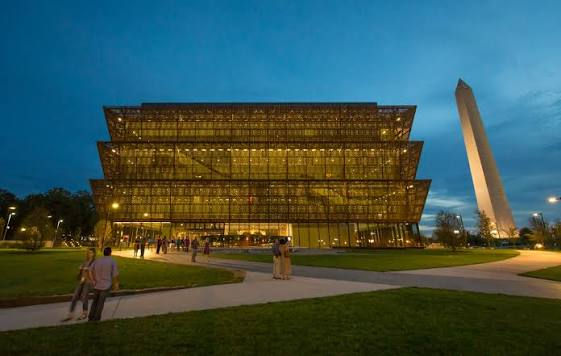
The museum, which finally opened beside the Washington Monument in September 2016, became one of Washington’s most sought-after destinations. Its collection grew to roughly 40,000 objects, preserving everything from the brutality of slavery and segregation to Black achievement in politics, music, sports, military service, business and culture.
Nearly 13 million people have visited since its opening.
Bunch later described his improbable assignment in the title of his book, A Fool’s Errand: Creating the National Museum of African American History and Culture in the Age of Bush, Obama, and Trump.
President George W. Bush appointed him to the Committee for the Preservation of the White House in 2002. President Barack Obama reappointed him in 2010. The African American museum itself resulted from decades of advocacy and ultimately opened with Bush and Obama participating in its dedication.
Three years later, in June 2019, Bunch became the Smithsonian’s 14th secretary. He assumed responsibility for 21 museums, 21 libraries, the National Zoo, research centers, and educational operations while overseeing the development of the National Museum of the American Latino and the Smithsonian American Women’s History Museum.
He led the Chicago Historical Society from 2001 to 2005 and previously worked at the Smithsonian’s National Museum of American History, where he rose to associate director for curatorial affairs. Earlier, at the California African American Museum in Los Angeles, he curated exhibitions on Black Olympians and Black life in Los Angeles.
The Belleville, New Jersey, native earned his undergraduate and graduate degrees from American University in Washington, and taught at American University, George Washington University, and the University of Massachusetts Dartmouth.
His honors include France’s Legion of Honor, the W.E.B. Du Bois Medal, the Freedom Medal from the Roosevelt Institute, the NAACP Legal Defense Fund’s National Equal Justice Award, and lifetime achievement awards from the American Alliance of Museums and the Association of African American Museums.
Just eight days before Tuesday’s announcement, Bunch published a remembrance marking the 10th anniversary of building the African American history museum. He recalled the September 2016 dedication, when four generations of the Bonner family rang a church bell once owned by a Black congregation founded in 1776.
“It’s really important that we have a commitment to telling the complete story of America,” he said. “Our job is to say, how do we tell an accurate history … that challenges America to live up to its ideals?”
And then there was Philadelphia last month.
“I’m doing the best I can with these crackers,” he said.
For years, Bunch had said museums should neither hide America’s achievements nor spare Americans from the parts of their history that hurt. In an essay published this summer for the nation’s 250th anniversary, he described the Smithsonian as “the keeper of the nation’s memory.”



Comments